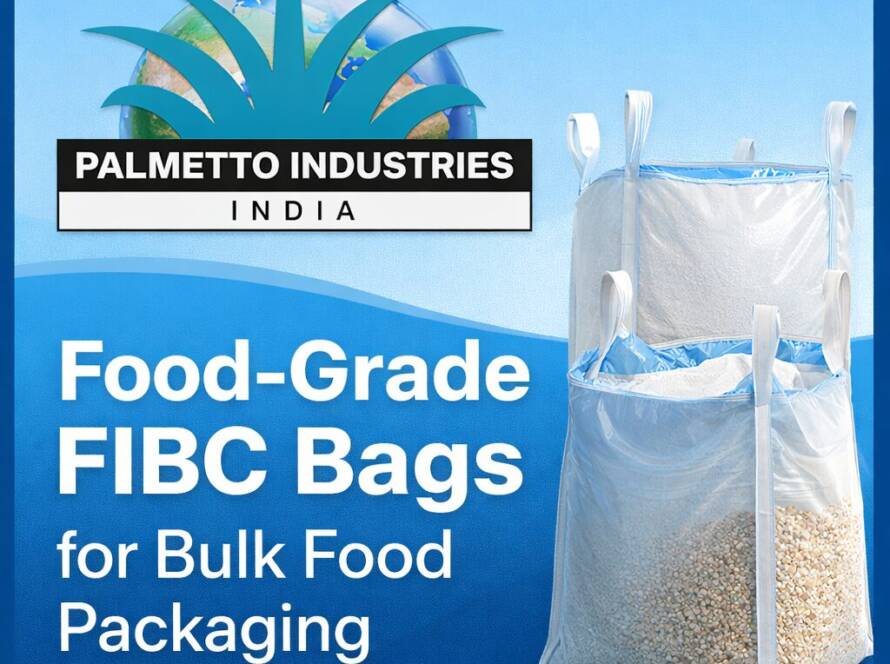
Food grade is not a finish. It is not a liner upgrade. It is not something a manufacturer adds to a standard industrial bulk bag before shipping it to a flour mill or a sugar processor.
Yet a significant number of food grade FIBC bags in the market are exactly that — standard construction with a food-safe liner dropped in, and a certificate attached that was last audited three years ago.
For buyers in the food processing industry, that gap is not a procurement inconvenience. It is a compliance liability.
This piece is for procurement heads, plant managers, and supply chain leads in food manufacturing who already know what an FIBC bag is — and want to understand what actually separates a bag that is genuinely food safe from one that merely carries the label.
The Label Is Not the Standard
“Food grade” as a term has no single global definition. What it means in practice depends on which standard your supply chain is governed by — FDA 21 CFR (United States), EU Regulation 10/2011 (Europe), BRC Packaging Standard (UK-anchored, globally adopted), or your buyer’s own internal specification sheet.
A bag that meets one framework does not automatically meet another. A supplier that is HACCP certified for their own internal process may or may not produce bags that comply with FDA contact material requirements. A liner that is food-safe for dry goods may not be appropriate for hygroscopic materials like salt or moisture-sensitive products like starch.
The first question to ask any food grade FIBC bag manufacturer is not “do you make food grade bags.” It is: “which standard are your bags certified against, and can you show us the documentation?”
Where Food Safety Actually Lives in an FIBC Bag
A food grade FIBC bag is not one component. It is a system of material choices, production conditions, and inspection protocols working together. Any one of them failing creates a contamination risk.
The Raw Polypropylene
The outer woven fabric of a food grade FIBC must be made from 100% virgin polypropylene — not recycled, not reprocessed, not blended. Recycled PP can carry trace contaminants from its previous use that no liner will fully contain. Virgin PP ensures you are starting with a chemically clean base material.
Some manufacturers use recycled content in the fabric of food contact bags to reduce cost. This is not always visible from the outside, and it will not show up in a basic visual inspection of the bag at goods-in.
Ask for the raw material declaration from your supplier. If they cannot provide it, that is your answer.
The Inner Liner
The liner is where most food contamination risk is managed — and where most of the specification complexity sits.
| Liner Type | Best For | Key Considerations |
| PE (Polyethylene) tubular liner | Grains, flour, sugar, pulses | Food-grade PE only; check thickness (80–150 micron typical) |
| Aluminium foil liner | Moisture-sensitive, light-sensitive products | Higher cost; check seal integrity |
| Barrier liner (multi-layer) | Products requiring oxygen or humidity control | Confirm gas permeability spec |
| No liner (direct contact fabric) | Only where fabric itself is food-safe certified | Requires clean-room fabric production |
The liner must be heat-sealed, not just folded. A folded liner in transit will shift, open at the base, and allow product to contact the outer woven fabric — which, even in a virgin PP bag, is not a food-contact-certified surface unless specifically manufactured and certified as such.
Seal integrity is not always checked at the manufacturer end unless it is explicitly in the quality protocol. Confirm this before finalising your supplier.
The Production Environment
Food grade FIBC bags should be sewn in a dedicated clean-room or controlled production zone — separate from bags produced for chemical, construction, or agricultural use. Cross-contamination on the production floor — dust, fibres from non-food applications, lubricants from industrial machinery — can compromise a bag that is otherwise correctly specified.
This is not a theoretical risk. It is a failure mode that appears regularly in third-party audits of FIBC suppliers who produce for multiple industries under one roof without zone separation.
Ask to see the facility’s food-zone protocol and whether food-grade production runs are scheduled separately or run concurrently with industrial production.
Final Inspection
A food grade bag that passes material checks and production controls should still pass through two non-negotiable final checks:
Metal detection. Any stitching break, needle fragment, or foreign metallic body in or on the bag needs to be caught before dispatch. Metal detection on the final inspection line is standard in compliant food grade FIBC manufacturing. If your supplier does not run finished bags through a metal detector, that is a gap.
Batch traceability. If a contamination event occurs downstream — in your plant, at your customer’s site, or at port — you need to be able to trace the bag batch back to the raw material lot, production date, and inspection record. This is a basic HACCP requirement. Suppliers who cannot provide batch traceability records are not operating a HACCP-compliant system regardless of what their certificate says.
What the Certifications Actually Confirm
Two certifications matter most for food grade FIBC procurement:
ISO 22000:2018 — This is a Food Safety Management System standard. It confirms that the manufacturer has a documented, audited system for identifying and controlling food safety hazards across their entire operation. It does not certify individual bags; it certifies the management system around how bags are produced.
HACCP (Hazard Analysis and Critical Control Points) — This is a process-level certification. It confirms that the manufacturer has identified every point in the production process where a food safety hazard could enter, and has control measures in place at each of those points.
Both together mean the manufacturer is not just claiming food safety — they have been externally audited against internationally recognised frameworks for it.
“The certificate on the wall matters less than whether the production floor actually runs the way the certificate assumes it does. When we audit suppliers, we look at the gap between the documented process and what happens on a normal production day — that is where food safety actually lives.” — Supply chain auditor, food export industry
A supplier that holds neither certification but produces “food grade” bags is asking you to take their word for it. In a regulatory environment where food contact materials traceability is increasingly scrutinised — by importers, retailers, and food safety authorities — that is not a position most food businesses want their packaging supply chain to be in.
The Questions That Separate Compliant Suppliers from the Rest
Before you finalise a food grade FIBC bag supplier, run through these:
- What is the virgin PP declaration for your fabric, and can you share the raw material COA? A compliant manufacturer will have this on file for every production run.
- Is your food-grade production run in a dedicated zone or on shared lines? Shared lines are not automatically disqualifying, but the zone separation protocol needs to be documented and audited.
- What liner specification do you recommend for our product, and why? A supplier who asks about your product’s moisture sensitivity, bulk density, and handling conditions before recommending a liner is thinking about your application. One who gives you a standard liner spec without questions probably is not.
- What is your metal detection threshold, and at which stage of production is it applied? It should be applied to finished bags, not just to component materials.
- Can you provide batch traceability records from raw material to dispatch for a recent order? This is a standard request. Any food-grade FIBC manufacturer operating a HACCP system will have this.
- Which food safety standards are your bags compliant with — FDA, EU 10/2011, BRC? The answer should match your end-market requirements.
Who Gets This Right — and What It Looks Like
A food grade FIBC bag from a manufacturer who gets this right looks, from the outside, almost identical to one from a manufacturer who does not. That is the problem.
The difference is in the raw material declaration, the production zone audit trail, the liner seal specification, the metal detection log, and the batch traceability record — none of which you can see by looking at the bag.
At Palmetto Industries (India) Pvt. Ltd. — operating as Palmetto Bags, Puducherry — food grade FIBC bags are produced under ISO 22000:2018 and HACCP certified systems, using 100% virgin food-safe polypropylene, in a dedicated clean-room production zone, with metal detection on every finished bag and full batch traceability from raw material to dispatch. The bags are compliant with FDA, EU, and BRC food safety standards, and the certifications are third-party audited — not self-declared.
For food businesses sourcing bulk packaging for sugar, flour, salt, grains, starch, or spices — whether for domestic distribution or international export across 30+ countries — this is what food grade compliance looks like when it is built into the manufacturing process rather than added as a label.
To request specifications, samples, or a quote: 📞 +91 98401 52481 📧 sales@palmetto.in 📍 No. 105/1, Mettu Street, Chinna Kalapet, Puducherry – 605014 🕗 Monday – Friday, 8 AM – 5 PM IST
FAQs
- What makes a FIBC bag food grade?
A food grade FIBC bag must be made from 100% virgin polypropylene, produced in a hygienic manufacturing environment, fitted with a food-safe liner appropriate for the product being stored, inspected through metal detection, and manufactured under a certified food safety management system such as ISO 22000 or HACCP. All of these elements together constitute genuine food grade compliance. - Can food grade FIBC bags be reused?
Food grade FIBC bags can be reused if they are undamaged, have not been used to carry non-food materials, and can be cleaned to the hygiene standard required by your application. Single-use is often preferred in food export contexts to eliminate contamination risk between cycles. Discuss reuse requirements with your manufacturer before ordering. - What is the difference between a food grade liner and a standard PE liner?
A food grade PE liner is produced from virgin polyethylene resin without the additives, slip agents, or antistatic compounds sometimes used in industrial-grade PE film. It must meet food contact material regulations for the relevant market (FDA, EU 10/2011, etc.). A standard PE liner may not meet these material specifications even if it looks identical. - Do food grade FIBC bags need to meet FDA standards if I am exporting to the US?
If the bag comes into direct contact with food products destined for the US market, the contact materials should comply with FDA 21 CFR requirements for food contact substances. Confirm this with your supplier and request the relevant documentation before the order is placed. - How do I verify a food grade FIBC manufacturer’s certifications?
Request the original certificate documents, note the certifying body and certificate number, and verify directly with the certifying body if required. ISO 22000 and HACCP certificates will have an audit date and validity period — confirm the certificate is current, not expired.